Showing posts with label teaching strategies. Show all posts

Wednesday, July 28, 2010

To read makes my speaking English good?

Confession time...when it comes to grammar I am one of those people. You know...the kind who will edit someone's doodles, or worse, their e-mails/Facebook updates/love letters. If you haphazardly scribble me a note I will read it, acknowledge it, and probably add a comma. I can't help it - I love writing, editing, and grammar, especially when it's used correctly. So for this post I would like to share some of the best grammar resources I've found in the SERC Library...


The Chortling Bard - Caught'ya! Grammar with a Giggle for High School (IM 428.00712 KIE)
Tee-hee...chortling indeed...even this book's cover illustration of a puffed up Shakespearean type incites a laugh. In this 226-page resource, the author uses three of the Bard's most famous tales to teach writing mechanics to high school students at any level. She adapts the stories into modern, vocabulary-rich English, and includes thorough sentence breakdowns, word and literary device lists, and corresponding exams, as well as a grammar reference handbook. And as an added bonus, she includes a warm-up exercise for students to construct Shakespearean insults, pointing out that the average person won't know the origins of the words anyway, and that "English teachers are so thrilled that you are using Shakespeare that they won't mind." Now come check out this book, you gorbellied, clapper-clawed connigit!

Grammar Games (CD 372.61 DAV)
This award-winning CD-ROM contains four games for children to practice their grammar knowledge, including proper punctuation, formation of plurals and possessives, and identification of sentence fragments. Each game has multiple difficulty levels, allowing children of all ages to partake in the educational fun. The jungle-themed games (Rain Forest Rescue, Falling Fruit, Hidden Wonders, and Jungle Gizmo) are vibrantly colored and accompanied by a lively beat. This program will work both in and out of the classroom, so parents be sure to check this one out.

Tic-Tac-Grammar (IM 372.61 WIL)
This unique 166-page book fuses grammar lessons with the classic game of Tic-Tac-Toe. There are more than 150 different game sheets included, on which students match pictures with sentences in a fun, lightly competitive way. The games prompt students to make corrections to the provided sentences, in addition to coming up with new ones of their own. The book also contains additional activity ideas, recommended book lists, and blank Tic-Tac-Toe game pieces so that teachers can put their own creativity to good use. The excellent grammar guidance makes checking out this book a no-brainer - the only thing left to decide is who will be X's and who will be O's!

English Grammar in Use: A Self-Study Reference and Practice Book for Intermediate Students of English (IM 428.24 MUR)
Now...admittedly, the first three materials in this post speak to the more light-hearted side of teaching. But this book here? Serious business. This recently revised third edition is nearly 400-pages long, and contains hundreds of grammar rules with corresponding self-check exercises. There is also a CD-ROM included, with hundreds of additional practice activities, audio recordings of major grammar points, a built-in dictionary, and customized tests to help readers work on the areas of their choice. Though geared more towards self-study than school curriculum, teachers will find plenty of material to incorporate into their own lesson plans. It is also excellent for educators, college students, and any other individuals who need to brush up on their writing proficiency, or frankly, for grammar nerds like myself who get a cheeky delight out of testing our syntax savvy. Fun!


Note from the Grammar Police: Please feel free to point out any grammatical errors in this post in the comments. Statistics show a high likelihood of making a grammatical error when writing about not making grammatical errors.

Thursday, May 13, 2010

National Educational Bosses Week

To children, the principal's office can be a scary place, reserved for punishment of the worst behavior. But to teachers, the principal's office is...well...still pretty scary! But there's no need to be so intimidated by your boss. Sure, principals and school administrators usually have a lot on their plate, which can sometimes make them seem unapproachable or difficult to connect with. But their bottom line is often the same as your bottom line: giving children the best education possible and facilitating a productive, challenging and ultimately rewarding learning environment. May 16th-22nd is National Educational Bosses Week. In honor of our staid leaders, why not check out some of the SERC Library's favorite books related to school leadership?

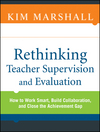
Rethinking teacher supervision and evaluation: How to work smart, build collaboration and close the achievement gap, by Kim Marshall (371.144 MAR)
This 258-page book introduces a holistic approach to teacher evaluation, emphasizing informal, quick visits to classrooms to build a rapport between principals and teachers and to allow for a real sense of familiarity to develop, rather than just relying on standardized tests and and metrics to measure performance.

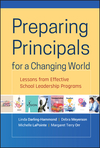
Preparing principals for a changing world: Lessons from effective school leadership programs, by Linda Darling-Hammond (371.201207 DAR)
This 320-page book is a comprehensive resource for implementing effective school policies and programs. By examining a variety of nationwide programs, the author recommends pathways to an ideal educational environment.

Meeting the needs of students of all abilities, 2nd Ed., by Colleen A. Capper and Elise M. Frattura (371.9046 CAP)
This step-by-step 162-page book provides the foundation for school leaders who want to shift from costly special learning programs for a few learners to excellent, inclusive educational services for all students, including English language learners, students with learning disabilities,and students from disadvantaged backgrounds.

Teachers wanted: Attracting and retaining good teachers, by Daniel A. Heller (371.1 HEL)
The public school system in the United States faces a perpetual challenge in attracting and retaining well qualified teachers. In this handy 114-page book the author, a principal, provides an insider's view of the sources of this ongoing problem and powerful suggestions for resolving it.

Who is your favorite pop culture principal?


Wednesday, May 12, 2010

Best Evidence Encyclopedia

In your explorations of our blog you may have noticed a link in the sidebar to the Best Evidence Encyclopedia, which may have prompted you to wonder what kind of resource could be worthy of being so prominently featured to the illustrious readers of the SERC Library Blog? Well, let us assure you, dear patrons, the Best Evidence Encyclopedia is truly our cuppa' tea! This informative site rates and summarizes reviews for a variety of programs for use in K-12 education. The website is a product of the Johns Hopkins University School of Education's Center for Data-Driven Reform in Education (CDDRE), and is funded by the Institute of Education Sciences and the U.S. Department of Education. This is an excellent resource for principles, school administrators and teachers. Truly a no-nonsense source of information (unlike our blog, which contains just a teensy bit of nonsense!).

Wednesday, April 21, 2010

Check out our newest materials!

The SERC Library has just posted our latest lists of new acquisitions on our website. Follow this link to browse our new materials in handy alphabetical and topical lists. You can then go to Iluminar to find more details on the items and to reserve them. And here's a tip: you can always see our newest materials as soon as they hit the catalog by scrolling down on the front page of Iluminar, where you'll see links to searches for New Books and New Tests. In the meantime, here are a few highlights:

Fasten your seatbelt: A crash course on Down syndrome for brothers and sisters. By Brian G. Skotko and Susan P. Levine, 2009. (YP 616.858842 SKO)


Think college!: Postsecondary education options for students with intellectual disabilities. By Meg Grigal and Debra Hart, 2010. (371.90474 GRI)


Freedom from meltdowns: Dr. Thompson’s solutions for children with autism. By Travis Thompson, 2009. (FAM 618.928588 THO)


Launching RTI comprehension instruction with shared reading: 40 model lessons for intermediate readers. By Nancy N. Boyles, 2009. (IM 372.47 BOY)

Wednesday, March 17, 2010

Edutopia: The George Lucas Educational Foundation

For a comprehensive and innovative look at the world of education, check out Edutopia, a leading online resource for educators and parents. Founded by George Lucas, the Edutopia Foundation strives to connect learning with the rapid advancements in technology and society. Their website, www.edutopia.org, is infused with the idea of crafting our children into lifelong learners. Some of the many resources you'll find there include videos, blogs, archives of their bimonthly magazine, and special reports on topics such as autism, financial literacy, and green education. One of their most popular features is what they call Edutopia Groups. These are online communities one can join to network and collaborate with peers all over the globe, ranging from broad subject matter ("Middle School") to groups on specific curriculum programs and best practices. There is even a group called "Stuff my Students Say", for teachers (or anyone!) who wants a little laugh. We think Edutopia is such a great resource here at the SERC Library that we've even added a news feed of their latest headlines to the sidebar of our blog! So be sure to take a look and add them to your own bookmarks. And remember, we must endeavor to make education relevant, ground-breaking and yes, even fun, as we move into this new decade and beyond. Or in the words of George Lucas' beloved character Yoda, "Always in motion is the future".

Monday, March 1, 2010

Only YOU Can Prevent Cyber Danger!


With the rapid pace at which technology is becoming embedded into our daily routines, it is not surprising that children are being introduced to it at younger ages than ever before. Gone are the days when seeing a teenager with a cell phone was an anomaly limited to only the wealthy and status-seeking. Today we all have cell phones and computers and a whole host of other gadgets designed to keep us connected. These tools are indeed wonderful, and are undeniably helpful when it comes to education. However, it is important to teach our children about proper safety, as well as to familiarize ourselves with the various ways in which we can help them to enjoy technology appropriately.

The government recently issued a report entitled "Net Cetera: Chatting with Kids About Being Online". This 54-page document is immensely informative, with sections addressing how to talk to children and teenagers of all ages about internet safety, how to take advantage of parental controls, how to handle social networking sites, comprehensive explanations of "Net speak" for those who may not be familiar with it, and more. This report is a great way for teachers and parents to feel empowered when it comes to talking to their kids about Net safety, which is especially important considering this subject is often overlooked in schools. According to a new study released by the National Cyber Security Alliance, only 35 percent of the school districts studied require any sort of cyber safety education, despite over 90 percent of teachers and administrators being in favor of including it in the curriculum. The study also highlights the growing debate over who is ultimately responsible for discussing the subject with children, with the majority of teachers saying it should be parents and the majority of school administrators saying it should be teachers. The one thing everyone seems to agree on is that it needs to be made a priority. Even the government thinks so, as evidenced by President Obama's Cyberspace Policy Review, which proposes putting a K-12 cyber education program in place on a national level. Luckily, with the help of this report, you can take responsibility for teaching your kids about technology and security today, whether you're a parent, teacher, or friend.


Access the report here, and an article about the NCSA study here.

Friday, February 5, 2010

Early literacy skills builder (ELSB). By Diane Browder, Susan Gibbs, Lynn Ahlgrim-Delzell, Ginerva Courtade, and Angel Lee, 2007. (IM 372.4145 BRO)


Have you met Moe the frog? This cute puppet with corresponding stories and activities make this program student-friendly. The ELSB language-rich literacy curriculum was developed for students ages 5 to 10 with moderate to severe developmental disabilities. It uses systematic instruction to teach both print and phonemic awareness to students with cognitive disabilities, autism, developmental delays, multiple disabilities and mild disabilities who are English learners. The ELSB is a multi-year program with seven distinct levels and ongoing assessments.

Wednesday, November 18, 2009

Mastermind behind Wikipedia launches education video website

Larry Sanger, who co-founded Wikipedia, has started a new online community aimed at educators and students. The website, www.watchknow.org, features an extensive library of education-related videos for children from ages 3 to 18. It also offers indispensable advice to teachers through the video format. For example, a simple search on geometry, filtered for ages 17-18+, returns such results as: "Helpful Ways to Teach Geometry", "Quadrilateral Song" and "How to Solve Geometry Proofs". Users can create accounts that allow them to add videos and edit descriptions. Because of this reliance on users to both expand and organize the collection, Sanger himself has described WatchKnow as "YouTube meets Wikipedia". Though still in in its infancy, WatchKnow already has 11,762 videos (and counting!). Considering the scope of material available on sites like YouTube and Wikipedia, it is not unlikely to think that one day WatchKnow's collection could be truly powerful in its ability to harness the power of the internet by bringing together people and ideas on a global level. So bookmark WatchKnow, spread the word to your fellow educators, direct your children there, and most importantly, contribute your own unique talent and voice. And for now, check out these videos found by browsing the poetry section....

Shel Silverstein narrating his poem "Ickle Me, Pickle Me, Tickle Me Too":


T.S. Eliot narrating his poem "The Love Song of J. Alfred Prufrock":


Langston Hughes narrating his poem "I, Too":

Saturday, October 24, 2009

Children's Magazine Month

Have you ever studiously searched for hidden pictures in Highlights? Have you journeyed with Ranger Rick through new and exciting eco-systems (or your own backyard)? Or have you discovered a new favorite story in Cricket? Then you have been the recipient of the magic and knowledge that children's magazines can offer. Often overlooked in favor of books, today's magazines might surprise you with the abundance of literary richness they contain. Celebrate Children's Magazine Month in October by utilizing the comprehensive collections held by most school and public libraries, by subscribing yourself, or by utilizing them as teaching tools in your classroom. Check out the following links for ideas:

Tuesday, October 6, 2009

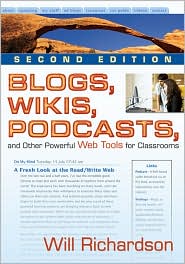
Blogs, wikis, podcasts and other powerful web tools for classrooms, 2nd edition, by Will Richardson (371.33 RIC)

Are you befuddled by blogs? Wondering about wikis? Puzzled by podcasts? Then we have the resource for you! Check out this handy new resource guide by Will Richardson: Blogs, wikis, podcasts, and other powerful web tools for classrooms, 2nd ed. (371.33 RIC). This newly revised edition is full of current information on how to incorporate today's wealth of technology resources into your curriculum. With sections on internet safety, information literacy, and thorough definitions of web tools such as RSS feeds, social bookmarking and wikis, this book is both a how-to guide and a pedagogical approach to incorporating web resources into your classroom. It also includes many real world examples by K-12 teachers that are sure to both inspire and guide you. Using this technology appropriately will not only help to streamline and improve your existing classroom methods, but it will also help you to connect with your students, many of whom will have been immersed in this technology from a very young age. Speaking of new technology, what better way to familiarize yourself with our new online card catalog than by logging in and reserving this item for yourself? See this post here for instructions on setting up your account. Remember, the internet is one of the last great frontiers. So why not be a pioneer?

Tuesday, April 7, 2009

English Language Learners (ELL)


The following are recent additions of English Language Learners (ELL) materials to the SERC Library’s master collection.

To view the summary of each item click on the Card Catalogue link and enter the call number in parentheses in the keyword section.

To see the library’s entire collection of ELL materials enter ELL or English Language Learners in the keyword section and the complete list of ELL professional books, instructional materials, inservice materials will appear.


50 strategies for teaching English language learners(3rd Edition).
By Adrienne L. Herrell and Michael Jordon, 2008. (428.24 HER)

102 content strategies for English language learners: Teaching for academic success in grades 3-12. By Jodi Reiss, 2008. (428.24 REI)

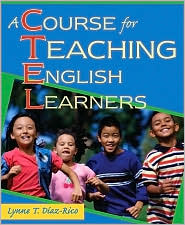
A course for teaching English learners. By Lynne T. Diaz-Rico, 2008.
(428.24 DIA)

Strategies for teaching English learners. By Lynne T. Diaz-Rico, 2008.
(428.24 DIA)

Teaching English language learners: A differentiated approach. By Carol Rothenberg and Douglas Fisher, 2007. (428.24 ROT)

Teaching English language learners, Grades K-5: Strategies that work. By Katherine Davies Samway and Dorothy Taylor, 2007. (428.24 SAM)

Teaching English language learners, Grades 6 and up: Strategies that work. By Katherine Davies Samway and Dorothy Taylor, 2008. (428.24 SAM)

Teaching English learners and immigrant students in secondary school. By Christian J. Faltis and Cathy A. Coulter, 2008. (428.24 FAL)