Showing posts with label observances. Show all posts

Thursday, May 13, 2010

National Educational Bosses Week

To children, the principal's office can be a scary place, reserved for punishment of the worst behavior. But to teachers, the principal's office is...well...still pretty scary! But there's no need to be so intimidated by your boss. Sure, principals and school administrators usually have a lot on their plate, which can sometimes make them seem unapproachable or difficult to connect with. But their bottom line is often the same as your bottom line: giving children the best education possible and facilitating a productive, challenging and ultimately rewarding learning environment. May 16th-22nd is National Educational Bosses Week. In honor of our staid leaders, why not check out some of the SERC Library's favorite books related to school leadership?
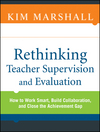
Rethinking teacher supervision and evaluation: How to work smart, build collaboration and close the achievement gap, by Kim Marshall (371.144 MAR)
This 258-page book introduces a holistic approach to teacher evaluation, emphasizing informal, quick visits to classrooms to build a rapport between principals and teachers and to allow for a real sense of familiarity to develop, rather than just relying on standardized tests and and metrics to measure performance.
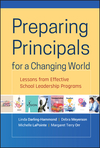
Preparing principals for a changing world: Lessons from effective school leadership programs, by Linda Darling-Hammond (371.201207 DAR)
This 320-page book is a comprehensive resource for implementing effective school policies and programs. By examining a variety of nationwide programs, the author recommends pathways to an ideal educational environment.

Meeting the needs of students of all abilities, 2nd Ed., by Colleen A. Capper and Elise M. Frattura (371.9046 CAP)
This step-by-step 162-page book provides the foundation for school leaders who want to shift from costly special learning programs for a few learners to excellent, inclusive educational services for all students, including English language learners, students with learning disabilities,and students from disadvantaged backgrounds.

Teachers wanted: Attracting and retaining good teachers, by Daniel A. Heller (371.1 HEL)
The public school system in the United States faces a perpetual challenge in attracting and retaining well qualified teachers. In this handy 114-page book the author, a principal, provides an insider's view of the sources of this ongoing problem and powerful suggestions for resolving it.

Who is your favorite pop culture principal?


Wednesday, April 14, 2010

National Poetry Month


as the buds peek out
from silken nests of green lace
the poet awakes

swirling through the stream
baby fish jump rainbows, while
words jump to my page

rhythm and buddha
and a compulsion to dream
bring poets to peace

full of life, April
heralds nothing so sweetly
sung as poetry


Can there be a more appropriate time of year to celebrate words than the lovely month of April? As the gentle hush of spring sweeps in and signs of nature's rebirth abound, we turn to the delectable sounds of syllables, of semantics, of poetry.

For some of the events surrounding this illustrious month, check out Poets.org, the most comprehensive web resource for poetry. There you'll find thousands of poem in an easily searchable database, as well as audio, video, essays and interviews. In honor of National Poetry Month, you can sign up to receive Poem-A-Day e-mails from Poets.org. You'll also find plenty of information about Poem In Your Pocket Day, which is exactly what it sounds like. The idea is to select a favorite poem and carry it with you all day on April 29, 2010. Whether you share it with friends, stage an impromptu reading on a crowded street, or simply peek at it yourself throughout the day, having a poem in your pocket is like having your own little secret treasure, and it can make the world just a little bit lovelier.

And of course, no post would be complete without a list of some of our favorite materials from our own collection. So next time you visit the SERC Library, be sure to check out:


Welcome to the world: A celebration of birth and babies from many cultures, Compiled by Nikki Siegen-Smith (YP 808.819354 SIE)

This gorgeous anthology combines black and white photography of infants with poems by an array of celebrated poets from around the world. From Ireland's Eavan Boland to England's D.H. Lawrence to anonymous authors from New Zealand and Cambodia, this book will awe you, inspire you, and remind you that we are all human and we are all born innocent.


Embracing the sky: Poems beyond disability, by Craig Romkema (811.6 ROM)

Here you will find pieces that encompass everything a good poetry collection should: an intertwining of desolation and appreciation that cleverly come together to reflect on all of the ugliness and beauty found in this world. The author is a young man with cerebral palsy and autism, and this is his way of both highlighting what it's like to live with disabilities and transcending it, by taking us into his mind and dissolving the difference between us.


When the horses ride by: Children in the times of war, Poems by Eloise Greenfield, Illustrations by Jan Spivey Gilchrist (YP 811.54 GRE)

This is another book in which the visuals are as stunning as the written words. The two mediums combine to paint a stark, yet ultimately hopeful, portrait of war and the effect it has on children. Here is a short poem featured in the book:

Voices

I hear their voices
mixing with the sounds of war.
Too much noise, almost
drowning out their words,
drowning out my thoughts.
Almost.


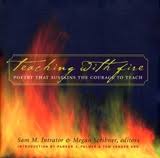
Teaching with fire: Poetry that sustains the courage to teach, Edited by Sam M. Intrator & Megan Scribner (808.81 INT)

The editors of this book have compiled eighty-eight poems and paired each one up with mini-essays by teachers reflecting on how the poem has touched his or her life. Featuring works by such well-known poets as Pablo Neruda, Walt Whitman, Adrienne Rich and Hartford's own Wallace Stevens, as well as a lot of helpful information on how to incorporate poetry into your curriculum, this book is highly recommended for educators and anyone looking for a little inspiration.


The tree is older than you are: A bilingual gathering of poems and stories from Mexico with paintings by Mexican artists, Selected by Naomi Shihab Nye (YP-SP 860.9 NYE)

The poetry contained within this volume speaks of the timelessness of nature and the endurance of the human spirit. This dynamic array of poems includes both the original Spanish and translated English versions, and is ideal for bilingual classrooms and curricula with a multicultural focus.

The SERC Library encourages drive-by poeting in the comments!

Wednesday, March 24, 2010

World Folk Art and Fables Week, March 22-28

The end of March ushers in not only the first peek of springtime, but also an international celebration of cultural history with World Folk Art and Fables Week. From ancient Rome to the dynasties of China to the native tribes of the Americas, folk stories are a fundamental part of our human history, and indeed they are one of the few commonalities shared by all cultures. The most wonderful thing about fables is the way that they seamlessly weave together entertainment and education, sweeping you up into a web of human tradition and spirit while also leaving you with valuable lessons. We're all familiar with Aesop's Fables, but there are thousands of lesser known tales of equal value, including some that can be found right here in the SERC Library!

Native American Animal Stories, Told by Joseph Bruchac (YP F BRU)
Though this 136-page book is located in our Young People's collection, the stories and illustrations within will entertain those of all ages. With 24 legends from tribes such as the Hopi, Mohawk, Tlingit and Dakota Sioux, as well as maps, tribal nation descriptions, and a glossary, this book will enrich your understanding of Native American history and legend.


The People Could Fly: American Black Folktales, told by Virginia Hamilton (YP F HAM)
This award-winning 178-page anthology presents a wealth of stories. Divided into categories like animal tales, fantasy, supernatural, and slave tales of freedom, the literature presented here will excite you, inspire you, amuse you...and maybe even scare you!


Golden Tales: Myths, Legends, and Folktales from Latin America, by Lulu Delacre (YP F DEL)
This 80-page book is filled with exciting tales from countries such as Bolivia, Mexico, and Cuba. But it is the gorgeous full color oil painting illustrations that really bring this book to life, along with all of its heroes, monsters, and fantastical creatures.


Afterwards: Folk and Fairy Tales with Mathematical Ever Afters, by Peggy Kaye (IM 372.7044 KAY)
This two-part series intersperses math lessons with classic stories to enhance children's understanding of the material, with one book designated for grades 1-2 and the other for grades 3-4. From measuring the growth of Rapunzel's hair to arranging Baba Yaga's dinner table to outwitting the trickster Anansi himself, these books are a unique way for teachers to combine math and literature.


Working Together: Building Children's Social Skills Through Folk Literature, by Gwendolyn Cartledge & James Kleefeld (IM 303.32 CAR)
This unique multimedia kit uses folktales from around the world to teach social skills to children in grades 3-6. It includes dozens of activities designed to enhance vital skills, including time management, respecting others, negotiation conflict and speaking positively. The kit comes with 5 audiotapes and 31 posters to aid with the lessons.


The Book of Virtues: A Treasury of Great Moral Stories, edited by William J. Bennett (FAM 808.8038 BEN)
We placed this book into our Family collection because there are few things that can bind a family together like shared stories and memories. In this colossal 832-page volume the author uses well-known tales to illustrate 10 key tenets of the human condition, such as demonstrating compassion with "The Little Match Girl" and courage with "Chicken Little", along with scores of others ranging from Greek myths to the Gettysburg Address. Why not take a cue from the simpler times these stories convey and turn off the television in favor of sharing a story or two with your own family?

Saturday, October 31, 2009

There's a crisp chill in the air, with falling leaves everywhere, but before going out...beware!


Halloween is one of America's most beloved holidays, as evidenced by stores filled with mountains of fun-size candy and an abundance of costumes, as well as the palpable air of excitement that surrounds October 31st. Whether you're going as Michael Jackson or Edward Cullen or a fairy princess, and whether you're going out or staying home to await trick-or-treaters, remember that safety is paramount. This year, with H1N1 on the rise, it is even more important to keep in mind the following general Halloween safety tips:


  • Accompany your children trick-or-treating, or else send them out with another trusted adult or teen.
  • If you're not going with them be aware of where your kids are going. Know their route and where they plan to be throughout the night. Check in with them using cell phones.
  • Set a solid curfew ahead of time so that everyone is on the same page about when they're expected home.
  • Keep to well-lit neighborhoods that you're familiar with, and use common sense guidelines for walking at night, such as toting a flashlight or reflective gear and being careful when crossing streets.
  • Never consume candy or food that has an opened wrapper or that appears to have been tampered with.
  • With the current prevalence of the H1N1 virus, take extra precaution when handling candy, as well as germ-riddled surfaces like doorknobs.
And last but not least....Happy Halloween!

Saturday, October 24, 2009

Children's Magazine Month

Have you ever studiously searched for hidden pictures in Highlights? Have you journeyed with Ranger Rick through new and exciting eco-systems (or your own backyard)? Or have you discovered a new favorite story in Cricket? Then you have been the recipient of the magic and knowledge that children's magazines can offer. Often overlooked in favor of books, today's magazines might surprise you with the abundance of literary richness they contain. Celebrate Children's Magazine Month in October by utilizing the comprehensive collections held by most school and public libraries, by subscribing yourself, or by utilizing them as teaching tools in your classroom. Check out the following links for ideas:

Tuesday, September 29, 2009

Banned Books Week

The last week of September is Banned Books Week, which is a time to celebrate and appreciate free speech and reading. The wonderful thing about reading is not only that there are so many different worlds one can enter by picking up a book, but that it is our individual choice that guides us on these journeys. You may delight in reading of the trials and tribulations of a quirky small town in the 1950s and your neighbor might love to get lost in a gripping political thriller, while I might devour an epic vampire love story. But when we allow individual choice to be limited we encroach on this great personal freedom, and we chip away at what makes reading so special in the first place. Many libraries use Banned Books Week as a way to highlight the maligned titles that fall into this category through special displays and programs that encourage people to read these books for themselves and form their own opinions.

Here in the SERC Library one of our most popular Young People's books holds the dubious honor of topping the list of most frequently banned books for the past two years: the absolutely delightful and heartwarming And Tango Makes Three by Justin Richardson and Peter Parnell (YP F RIC). This book depicts the true story of two Central Park Zoo male penguins who fall in love and form a family by adopting an abandoned egg and taking the baby penguin, Tango, under their wings (so to speak). This book is frequently challenged because of its open depiction of a homosexual relationship, despite the fact that the relationship is presented in a positive and loving manner. This dichotomy between the author's intention and the reader's interpretation is what lies at the core of most banned book controversies.

Or, as acclaimed author (and personal favorite of mine) Francesca Lia Block stated when asked how she felt about her books being censored: "I'm a bit surprised in one way, because the message of all of them is love, tolerance and self-expression. On the other hand, I am not surprised because the message is love, tolerance and self-expression."

So exercise your First Right Amendment and read a banned book!

Saturday, September 19, 2009

Happy International Talk Like A Pirate Day!


Ahoy, mateys!

There are many different ways that the world can be brought together. One of the more creative attempts at bridging cultures is International Talk Like a Pirate Day. Established in 1995 by two guys who, frankly, thought the world could use a little more pirate lingo, September 19th is dedicated to putting a little more "Arrrr" in your day. For more information, including suggestions for pirate fun and games, pirate lingo, a pirate FAQ, and more pirate links than you can fire a cannon at, visit the Talk Like a Pirate website.

Avast! Here in the SERC Library we have an excellent resource that focuses on...you guessed it...pirates! Multiple Intelligences Centers and Projects by Carolyn Chapman and Lynn Freeman (IM 370.1523 CHA) features a host of classroom centered pirate activities that are specifically designed to work with multiple intelligences. Check out this little treasure the next time your ship docks at the Ole Port o' SERC Library!

Happy Swashbuckling,
Lucy Dagger (courtesy of the Pirate Name Generator)

Tuesday, September 8, 2009

International Literacy Day!


Since 1967, September 8th of each year has been designated as International Literacy Day. Sponsored by the United Nations Education, Scientific, and Cultural Organization (UNESCO) and the International Reading Association, the day is meant to draw attention to the importance of literacy with a special emphasis on developing countries. There is no doubt that literacy is an issue that needs to be addressed on an international level, especially when considering the following statistics:


  • There are over 860 million illiterate adults worldwide (two-thirds of whom are women) and nearly 115 million children who lack access to education.
  • When mothers are taught to read the infant mortality rate can decrease by up to 50%.
  • Countries whose literacy rate is below 55% have an annual per capita income of less than $600.
  • 98% of all non-literates live in developing countries, with 52% in India and China alone.
  • The continent of Africa's literacy rate is less than 60%.
Domestically there are also urgent literacy needs to be met, especially when it comes to the undeniable connection between low literacy and poverty:
  • Only 15% of low-income 8th graders read at a proficient level, with only 3% of all 8th graders reading at an advanced level.
  • In the U.S. children of professional families hear an average of 2,153 words per hour, children of working class families hear 1,251 words per hour, and children of welfare families hear a mere 616 words per hour.
  • The average literacy proficiency levels of African American and Hispanic 12th graders is equal to that of white 8th graders.
  • 50% of all incarcerated adults are illiterate and 85% of juvenile offenders have reading problems.
  • Lower education and literacy levels coincide with the likelihood of women ending up in abusive relationships.
For more facts, idea starters, local events, posters, certificates of participation and more, visit the websites of UNESCO and the International Reading Association. Whether you participate on a local or an international level, your contribution to the greater community is both necessary and welcome. The only hope we have of conquering this overwhelming issue is to come together and make sure that no citizens of the world are left behind when it comes to possessing the crucial and self-empowering tools of reading and writing.

Facts taken from www.reading.org/downloads/meetings/ILD2007_literacy_facts.pdf and www.reading.org/downloads/meetings/ILD2007_facts.pdf

Wednesday, August 26, 2009

Women's Equality Day


It was a mere 89 years ago today (and almost 150 years after this country was founded) that American women finally gained the long sought after right to vote. Despite the enormity of that triumph, advancement has been gradual in the ceaseless struggle for equality. So on August 26th, Women's Equality Day, let us celebrate the progress that has been made while recognizing how far we still have to go:
  • On average women only earn 76% as much as men do. This disparity increases for women of color, with Black women making 65% and Hispanic women a mere 53% of the average male's salary. The wage gap is pervasive across the spectrum, though as of 2000 two-thirds of all working women were segregated into only 21 of the 500 occupational categories, known as "pink-collar" jobs.
  • For women over the age of 65 who are unmarried, Social Security makes up 52% of their total income, compared to retired single men for which it is only 38% of their income. If Social Security is taken away the poverty rate for older women would significantly increase from 12.4% to over 50%.
  • America has no nationally mandated maternity leave policy and is ranked last in a recent study of 21 high-income countries' parental leave policies.
  • Including the newly appointed Justice Sonia Sotomayor, only 3 of the 111 Supreme Court Justices have been female.
These facts merely touch on the vast gender inequality that still exists in the United States. Furthermore, women of color are disproportionately affected in negative ways when it comes to social issues. To celebrate Women's Equality Day consider signing a petition for reproductive justice, volunteering at a local women's center, or contacting your elected officials about the current healthcare crisis. Some helpful websites for taking action are the National Organization for Women, Planned Parenthood and Madre.

Facts taken from www.feminist.org and www.cepr.net

Wednesday, May 6, 2009

National Physical Fitness and Sports Month

In today's world we are inundated with stressful demands that take a toll on us not only mentally, but also physically. From the flailing economy to disease outbreaks to war, it's no wonder that the majority of Americans are too preoccupied to take proper care of themselves. Luckily the government has taken the time to designate May as National Physical Fitness and Sports Month, with May 1st also marking the start of the 2009 National President's Challenge. The President's Challenge invites American citizens to pledge to be active for at least five days a week for six weeks. It is all inclusive, with information tailored to specific age groups, from kids to seniors. Visit the National President's Challenge website to register by May 29th and to find a wealth of information and resources on how you and your community can participate. There are even award certificates with President Obama's signature available to everyone who participates! So what are you waiting for? It's time to put aside our stressors, get motivated and get moving!

National School Nurses Day

Who among us hasn't found respite in the sanctuary like setting of the school nurse's office as children? Whether bandaging your boo boo, taking your temperature, or simply letting you lie down in their darkened office for an hour during gym class, school nurses have long been a welcome and sympathetic hero to children in need. That is why today, May 6th, is designated as National School Nurses Day. Visit the National Association of School Nurses website to get suggestions on how to show your appreciation to these vital members of our educational system. Some of our favorite ideas are to have students make cards for their nurses or to hold a celebration breakfast in their honor. They were always there for us...now let's be there for them!